Fauna & Flora
of Cameroon
Discover the extraordinary biodiversity of "Africa in Miniature" — home to 5 vegetation zones, 900+ bird species, and ancient species found nowhere else on Earth.
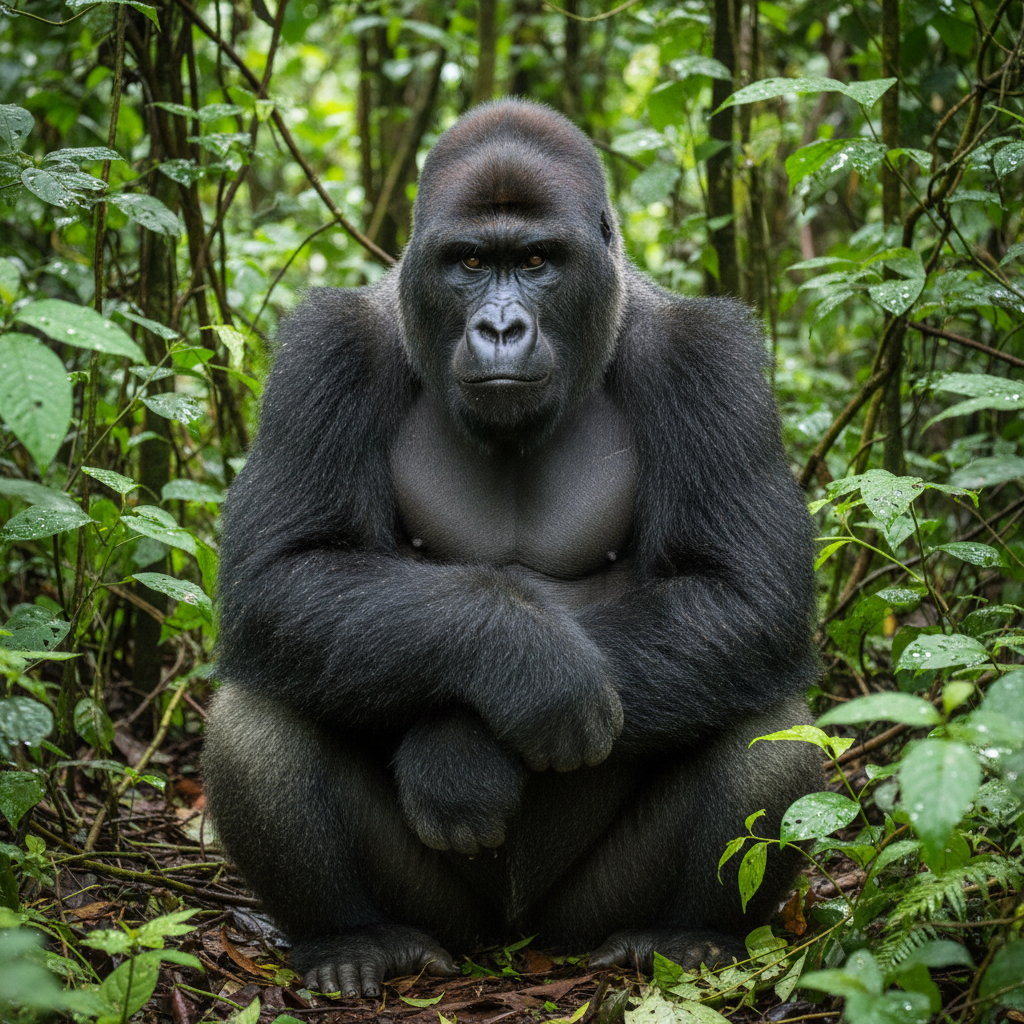
Western Lowland Gorilla
Gorilla gorilla gorilla
Cameroon hosts the world's second-largest population of western lowland gorillas. Family troops of 5–30 individuals are led by a silverback male who can weigh up to 200 kg. These highly intelligent great apes share 98.3% of their DNA with humans and use tools, display emotions, and have complex social structures.
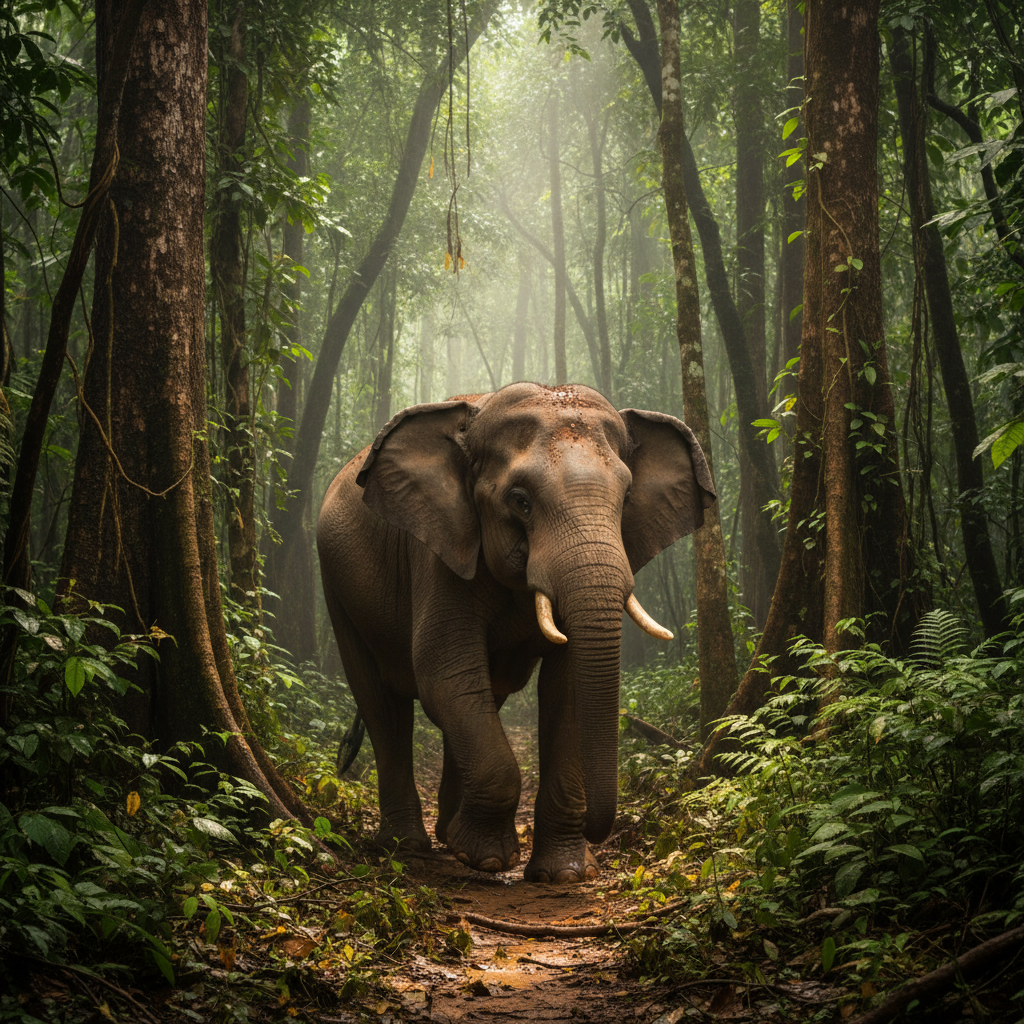
African Forest Elephant
Loxodonta cyclotis
Smaller and darker than savanna elephants, forest elephants are the 'gardeners of the Congo Basin'. They disperse seeds of over 30 key tree species, including the ironwood trees whose fruit only they can crack. Cameroon's Dja and Boumba-Bek reserves hold significant populations. Severely threatened by ivory poaching — populations have declined by 86% in 31 years.
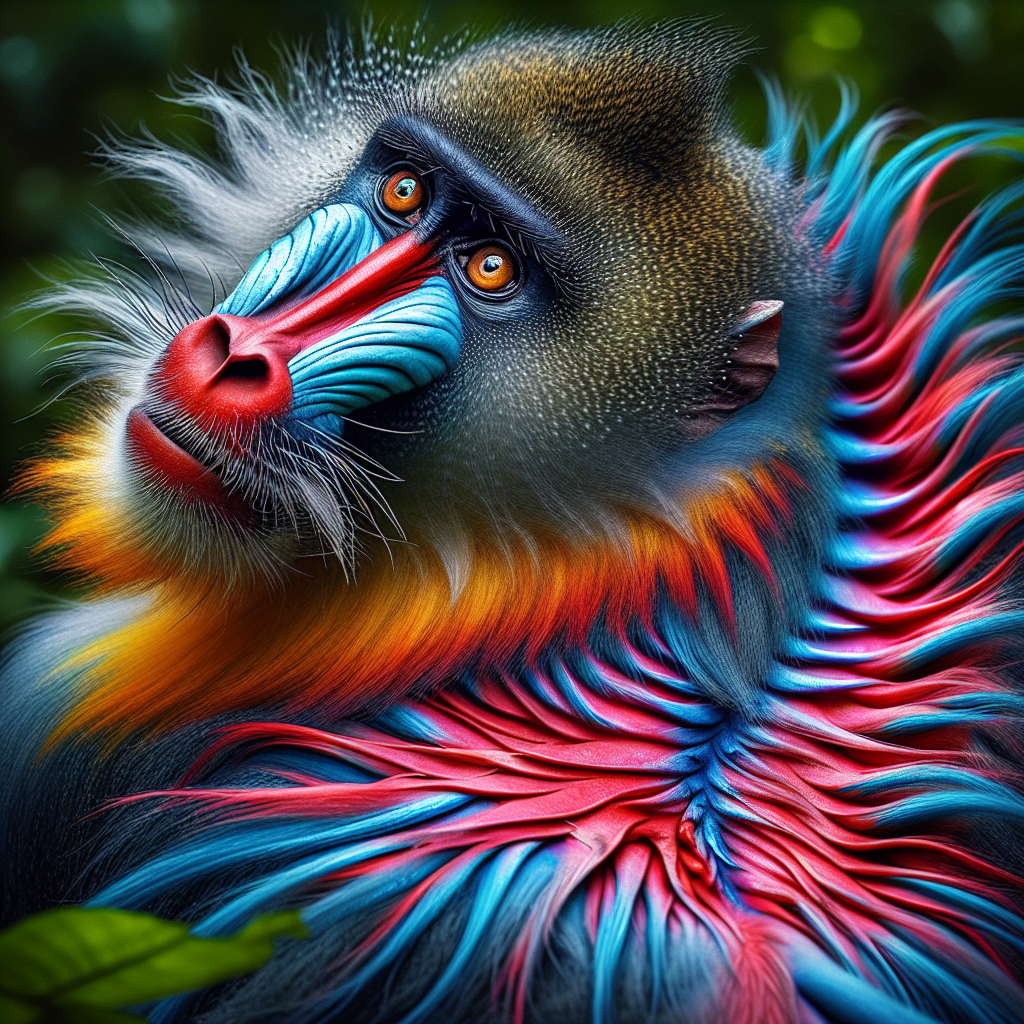
Drill Monkey
Mandrillus leucophaeus
One of Africa's most endangered primates, restricted to a tiny range in Cameroon and adjacent Nigeria. Drills live in large groups called 'hordes' of up to 200 individuals. Males have brilliantly coloured red, pink, and blue rumps — the most colourful rump of any mammal — used in dominance displays. Cameroon's Limbe Wildlife Centre runs a critical captive breeding programme.
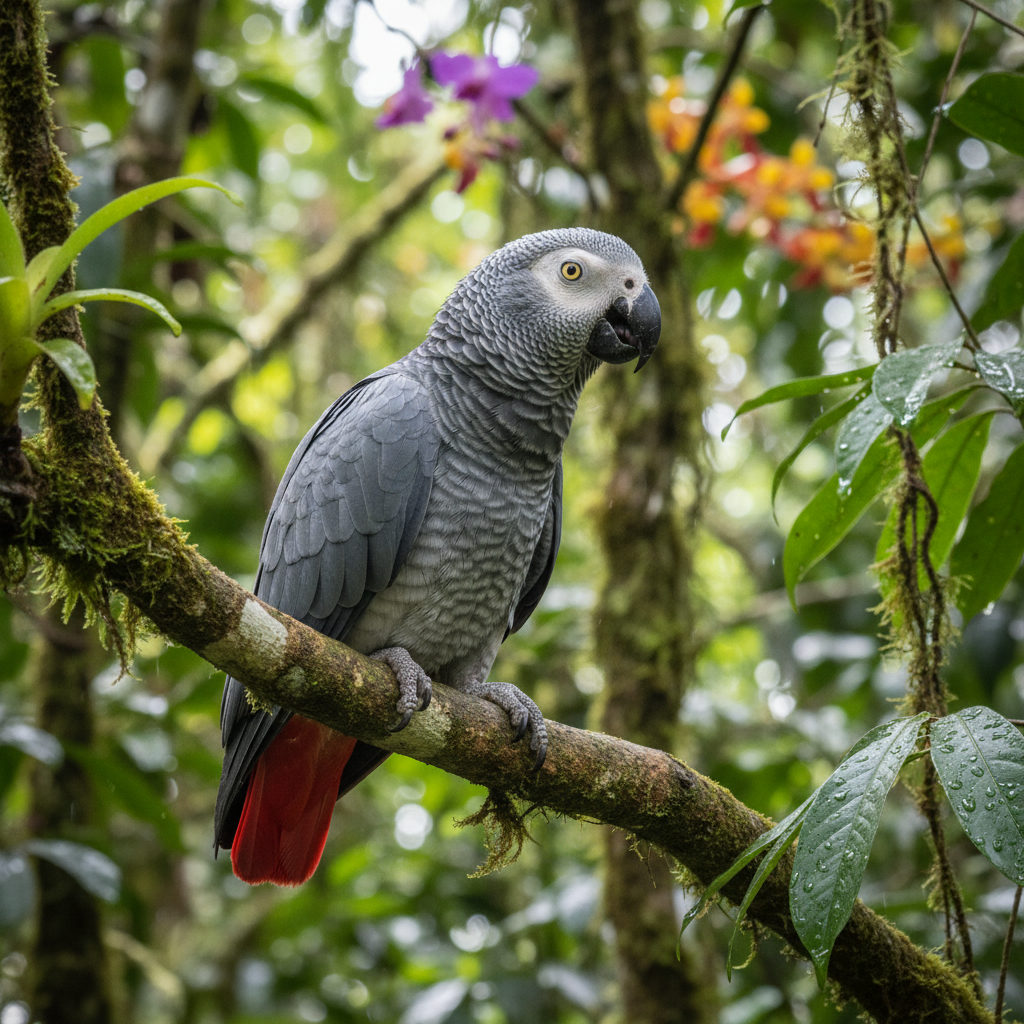
African Grey Parrot
Psittacus erithacus
The world's most cognitively gifted parrot. African grey parrots can learn vocabularies of 1,000+ words, understand object permanence, and solve multi-step puzzles. Cameroon's forests once held millions; populations have crashed by over 60% due to trapping for the global pet trade. Listed on CITES Appendix I since 2017 (trade banned). Flocks of hundreds still roost in forest clearings at dusk.
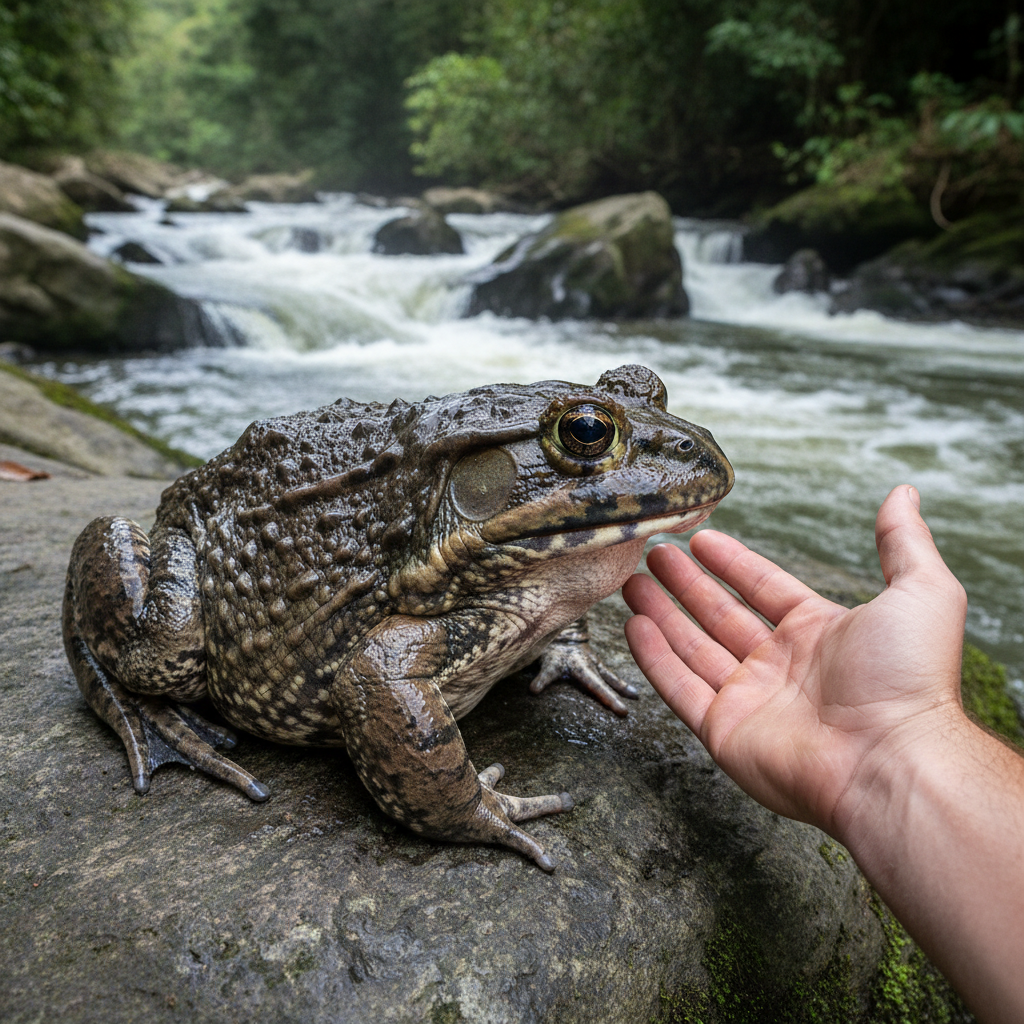
Goliath Frog
Conraua goliath
The world's largest living frog — found only in Cameroon and a tiny strip of Equatorial Guinea. Can reach 32 cm body length and weigh over 3 kg. Found in fast-flowing, well-oxygenated rivers around the Mungo and Nkoungue rivers. Remarkably, Goliath frogs build their own spawning pools by moving rocks up to 2 kg — one of the few known examples of frog nest construction.
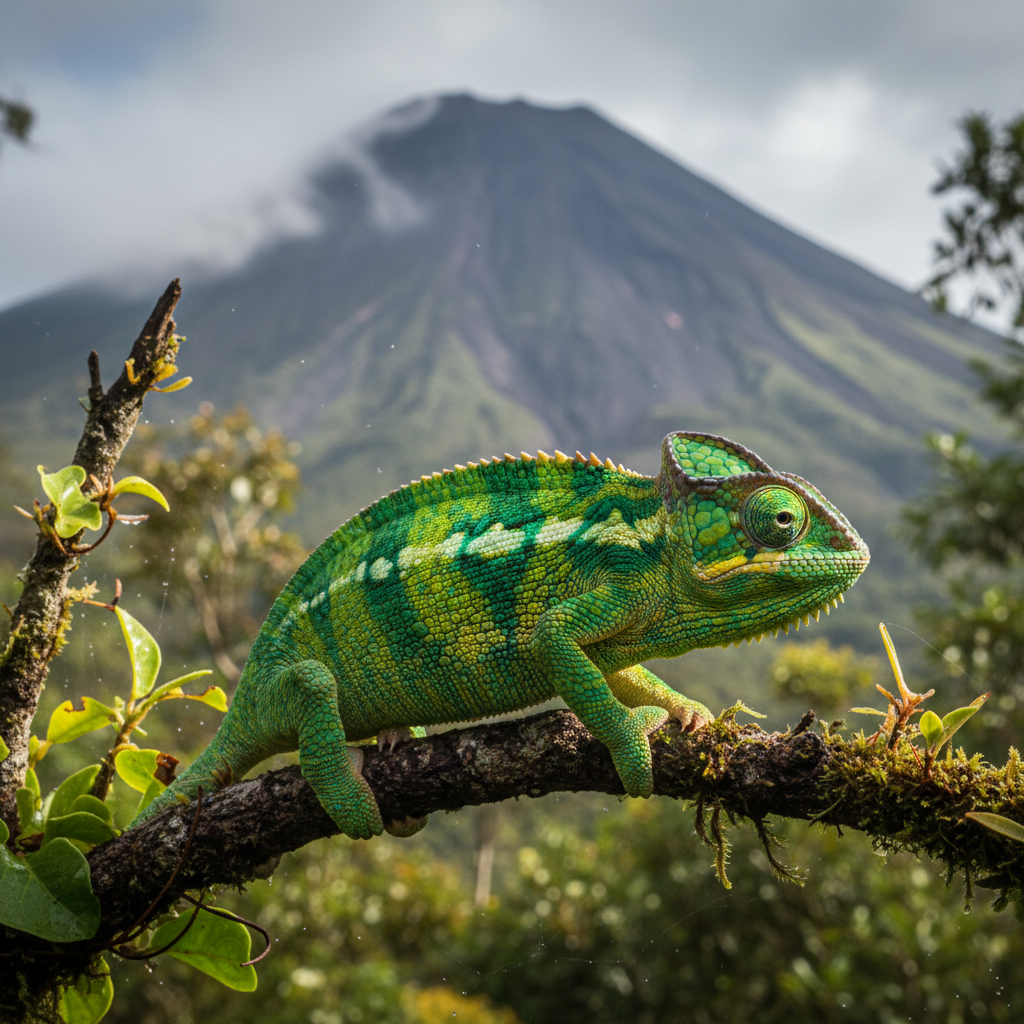
Mount Cameroon Chameleon
Chamaeleo camerunensis
Entirely endemic to the slopes of Mount Cameroon — one of the rarest and most geographically restricted chameleons on Earth. Found only between 800 and 2000 m altitude on Africa's largest active volcano. Changes colour in 2–3 seconds across vivid greens, yellows, and browns — triggered by temperature, light, and emotion rather than camouflage alone.
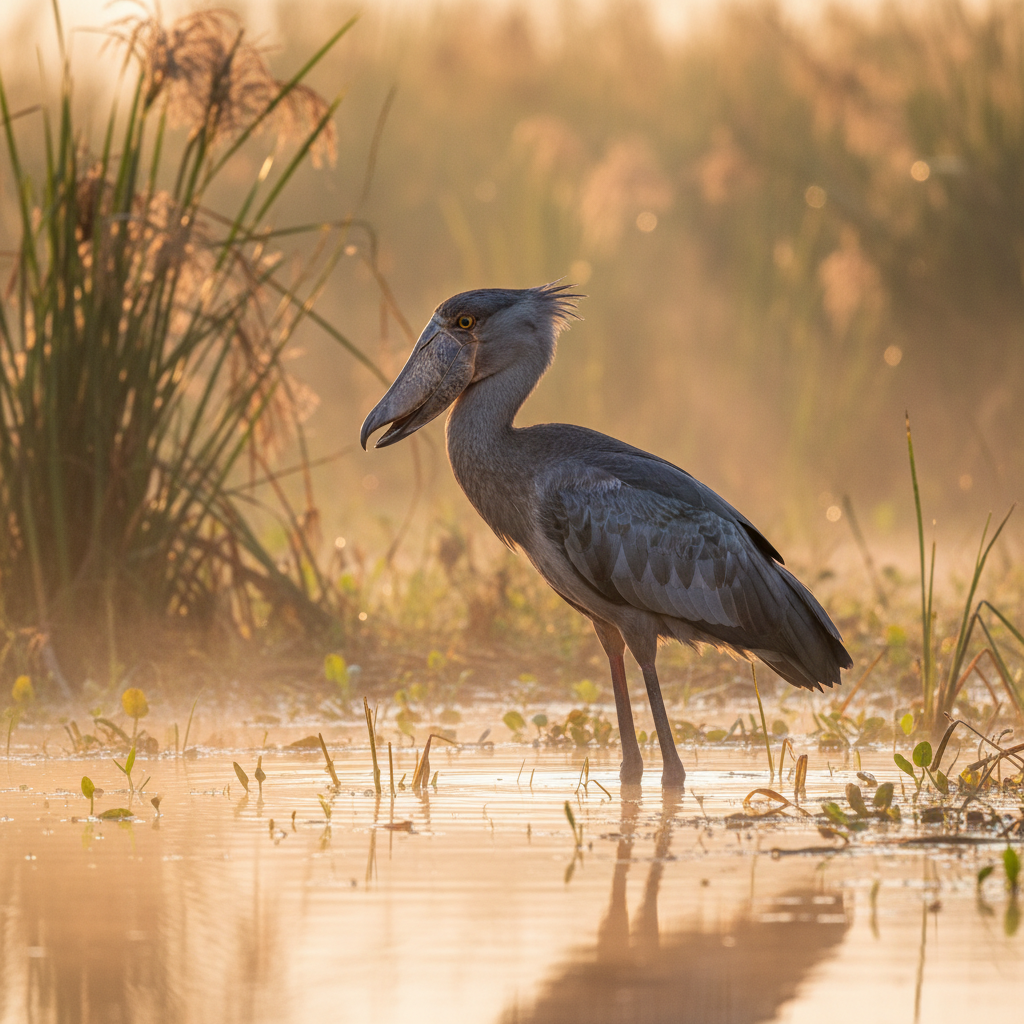
Shoebill Stork
Balaeniceps rex
One of the world's most prehistoric-looking and sought-after birds. The massive shoe-shaped bill — up to 24 cm long and 10 cm wide — is used to ambush lungfish, frogs, and even baby Nile crocodiles. Found in the papyrus swamps and floodplains of Cameroon's Far North (Lake Chad basin). Can stand completely motionless for hours. Among birdwatchers, a sighting is considered a 'grail bird'.
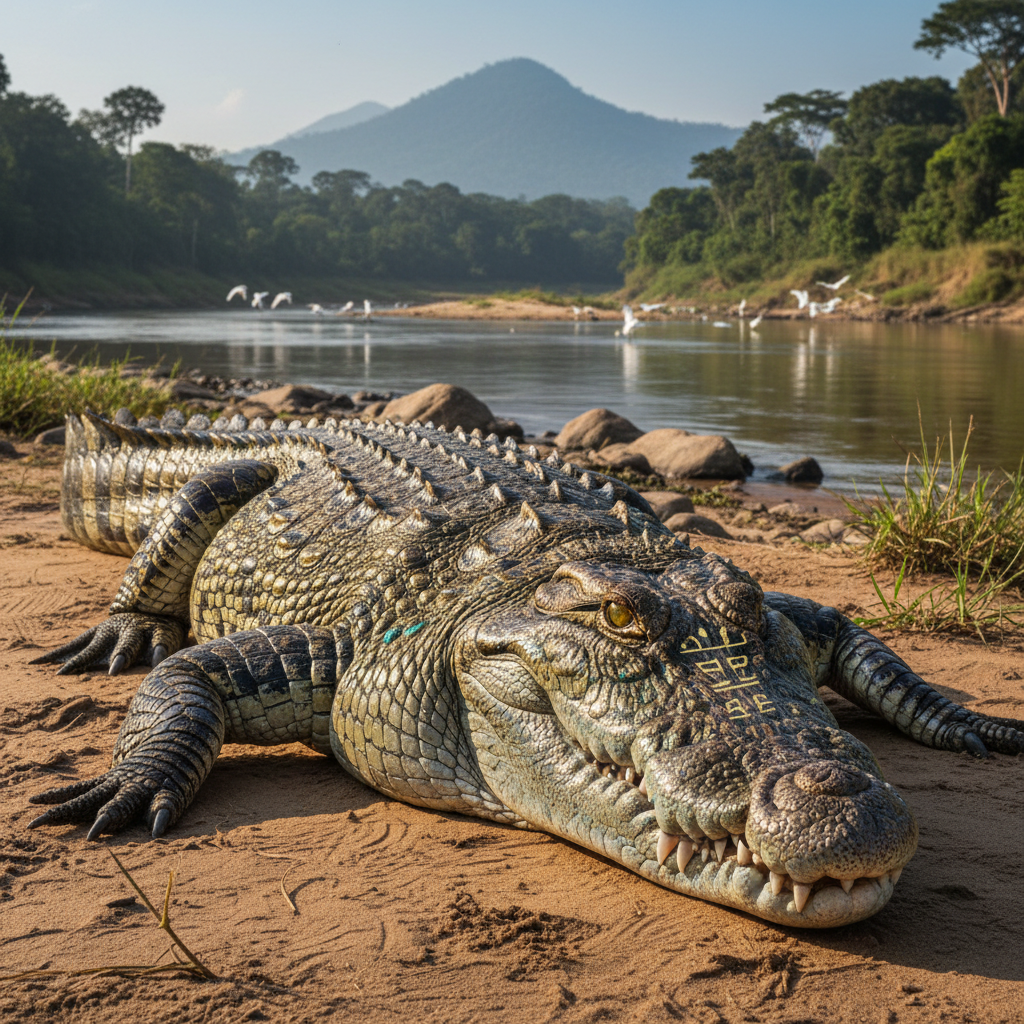
Nile Crocodile
Crocodylus niloticus
Africa's largest reptile and an apex predator of Cameroon's rivers. Inhabits major waterways — Sanaga, Wouri, Bénoué — and Lake Chad. Can exceed 6 m in length and 750 kg. In Bafia (Centre Region), crocodiles are considered sacred: community members feed them and they are never harmed. These 'sacred crocodiles' have lost their fear of humans over generations.
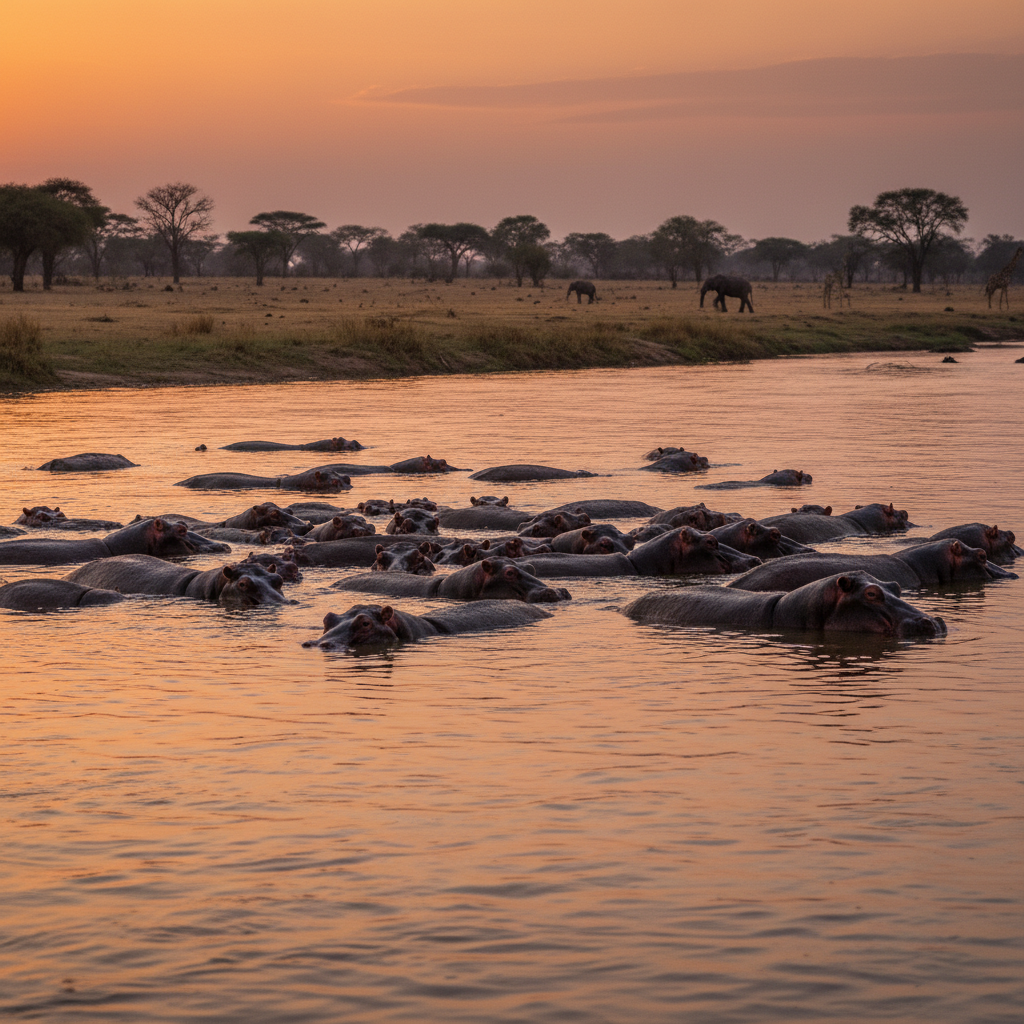
Hippopotamus
Hippopotamus amphibius
Once abundant across Cameroon's rivers, hippo populations have declined significantly due to hunting and habitat loss. Key populations survive in Waza National Park and the Logone floodplains. Despite their semi-aquatic lifestyle, hippos are the third-largest land mammals — and are more closely related to whales than to pigs. They play a crucial ecological role: a single hippo deposits 4 tonnes of dung annually into rivers, fertilising aquatic ecosystems.
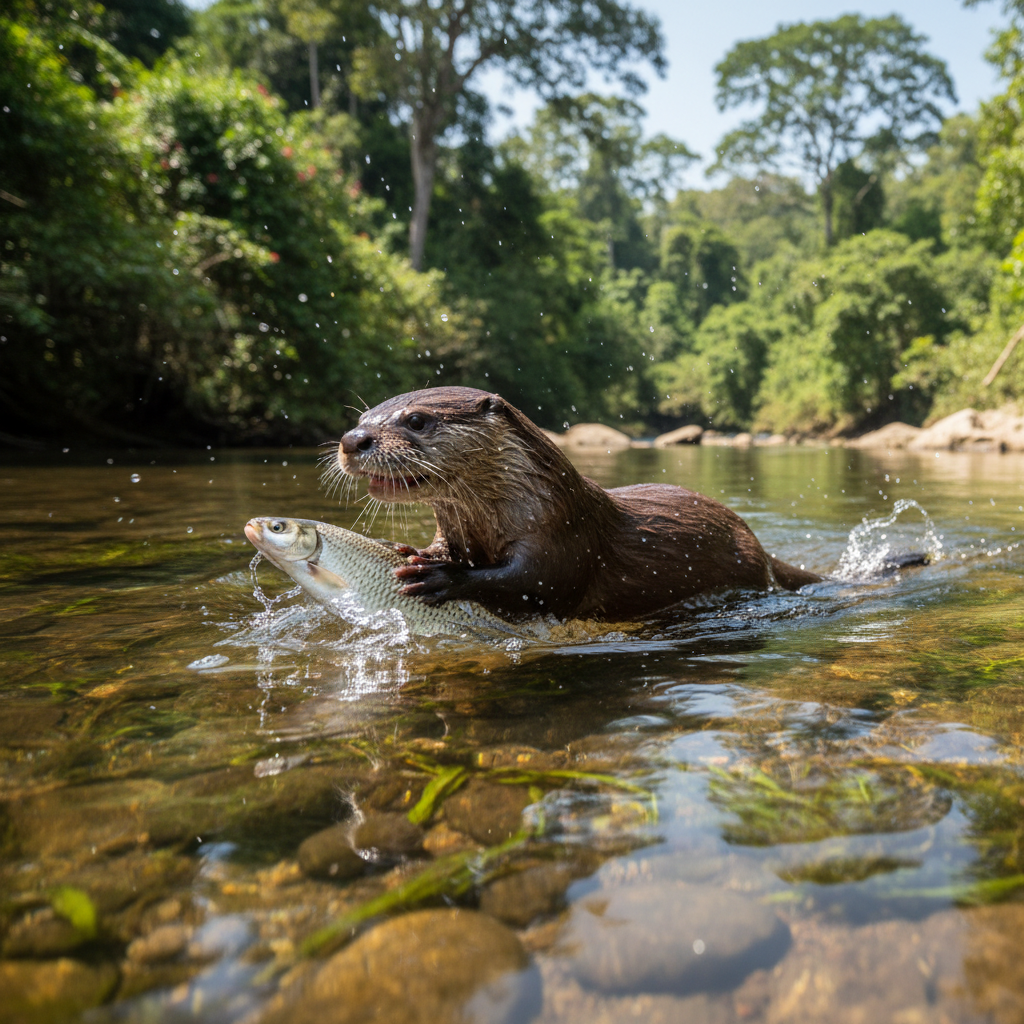
African Clawless Otter
Aonyx capensis
Africa's largest freshwater otter, found along Cameroon's rivers, estuaries, and mangrove coasts. Distinguished by its lack of webbing and claws on its nimble front paws — evolved to feel for crabs and molluscs under rocks in murky water. A key bioindicator: their presence signals a healthy river ecosystem. Threatened by pollution, fishing net entanglement, and loss of riverbank vegetation.
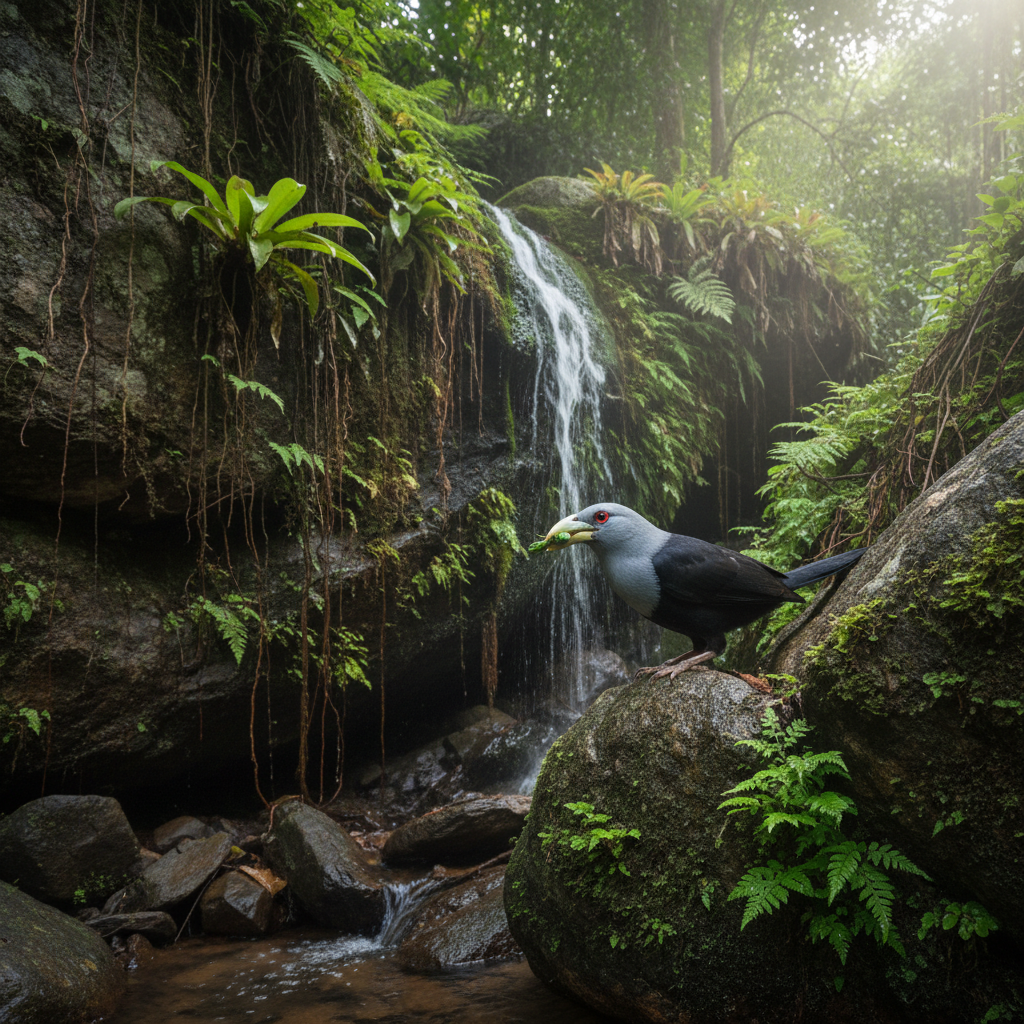
Grey-Necked Picathartes
Picathartes oreas
One of Africa's most enigmatic birds — and a prized target for ornithologists. Also called the 'rockfowl', picathartes nest exclusively on the vertical faces of rainforest inselbergs (granite outcrops) in the Southwest Region. Their extraordinary colonies — mud nests plastered to rock — have been used by the same families for 50+ years. They move by bounding on the ground and rarely fly.
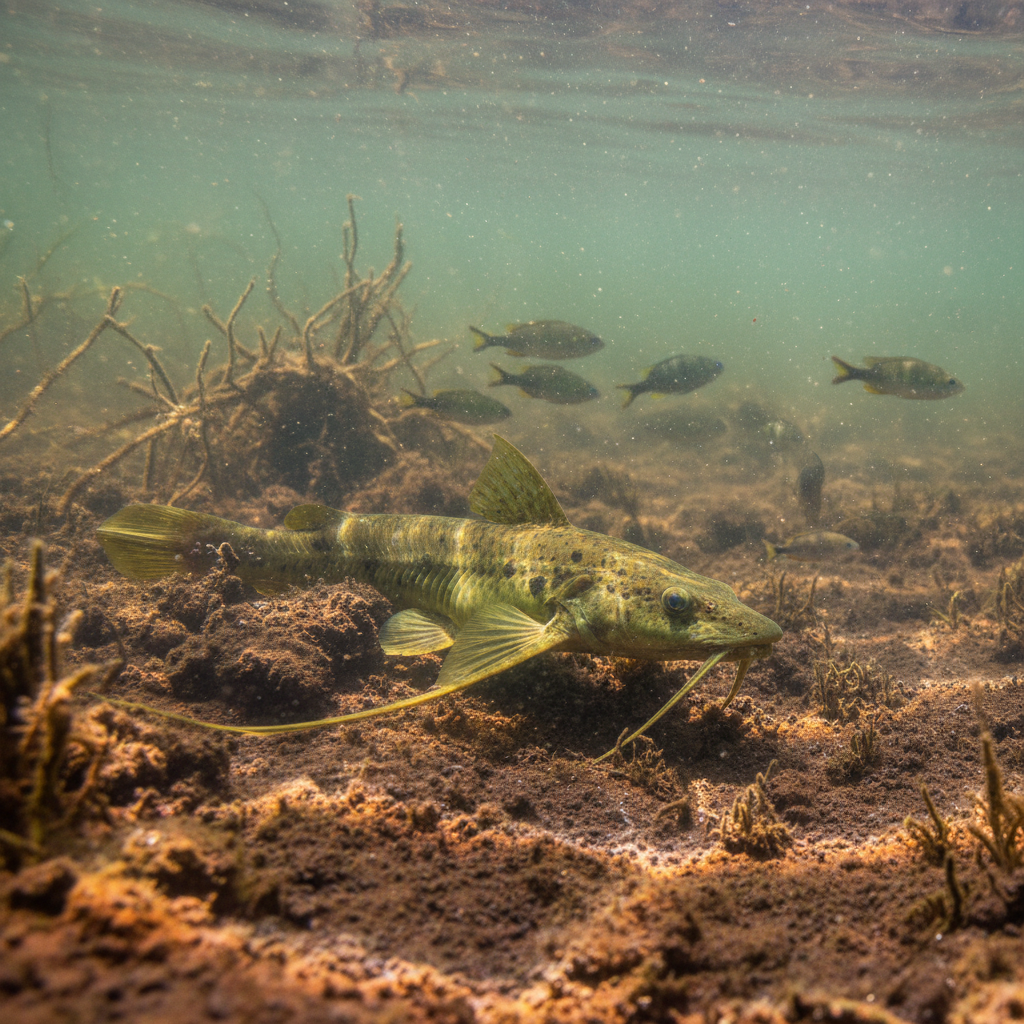
African Lungfish
Protopterus annectens
A living fossil unchanged for 400 million years. Cameroon's lungfish — found in the Logone floodplains and Lake Chad basin — can breathe air and survive in dried mud for up to 3 years during the dry season by entering a dormant state (aestivation). It burrows into mud, secretes a waterproof mucus cocoon, and breathes through a tiny air hole. When the rains return, it re-emerges fully alive.
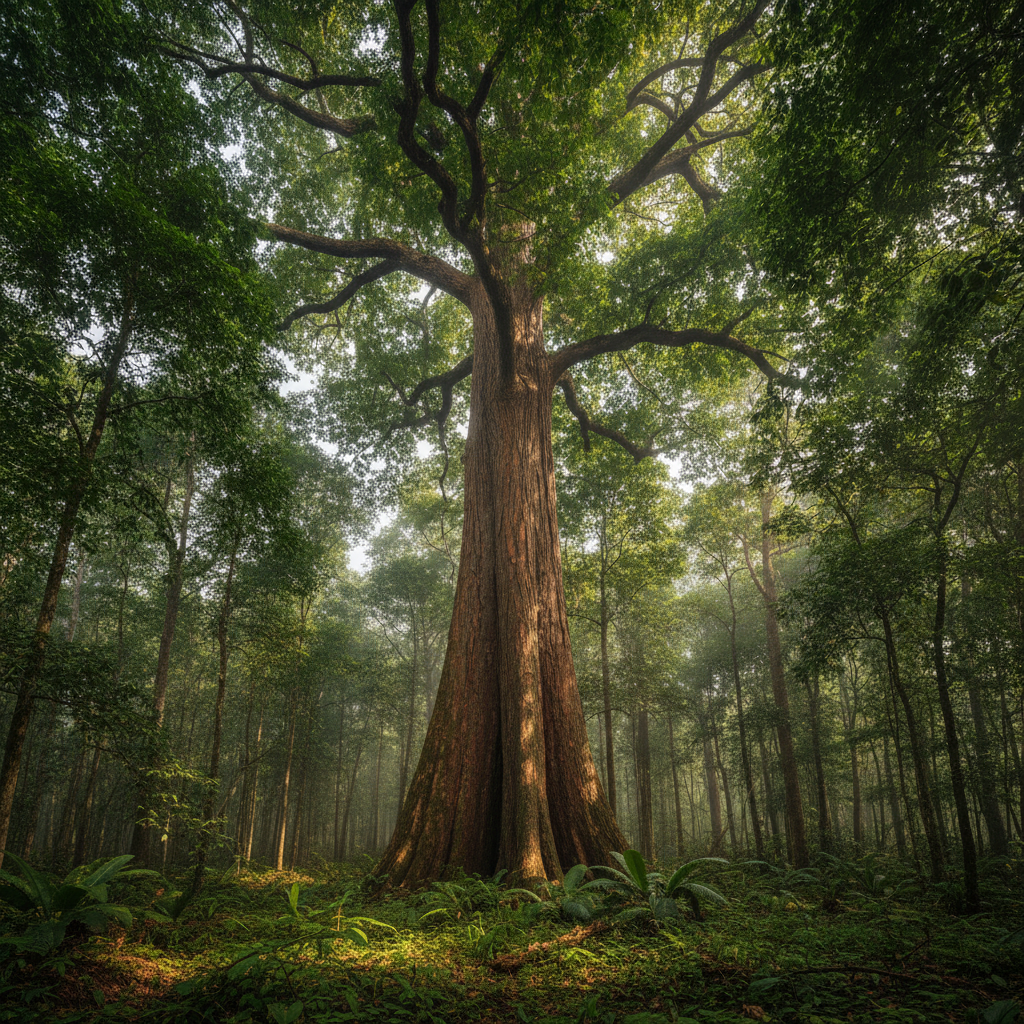
African Mahogany
Khaya ivorensis
A towering hardwood giant of Cameroon's equatorial rainforests, reaching 45 m with massive buttress roots. One of Africa's most commercially valuable timbers — prized globally for furniture, boat-building, and musical instruments (used in guitar bodies). The bark contains limonoids used in traditional medicine to treat fever and malaria. Seed pods are dispersed by wind in a spiralling flight.
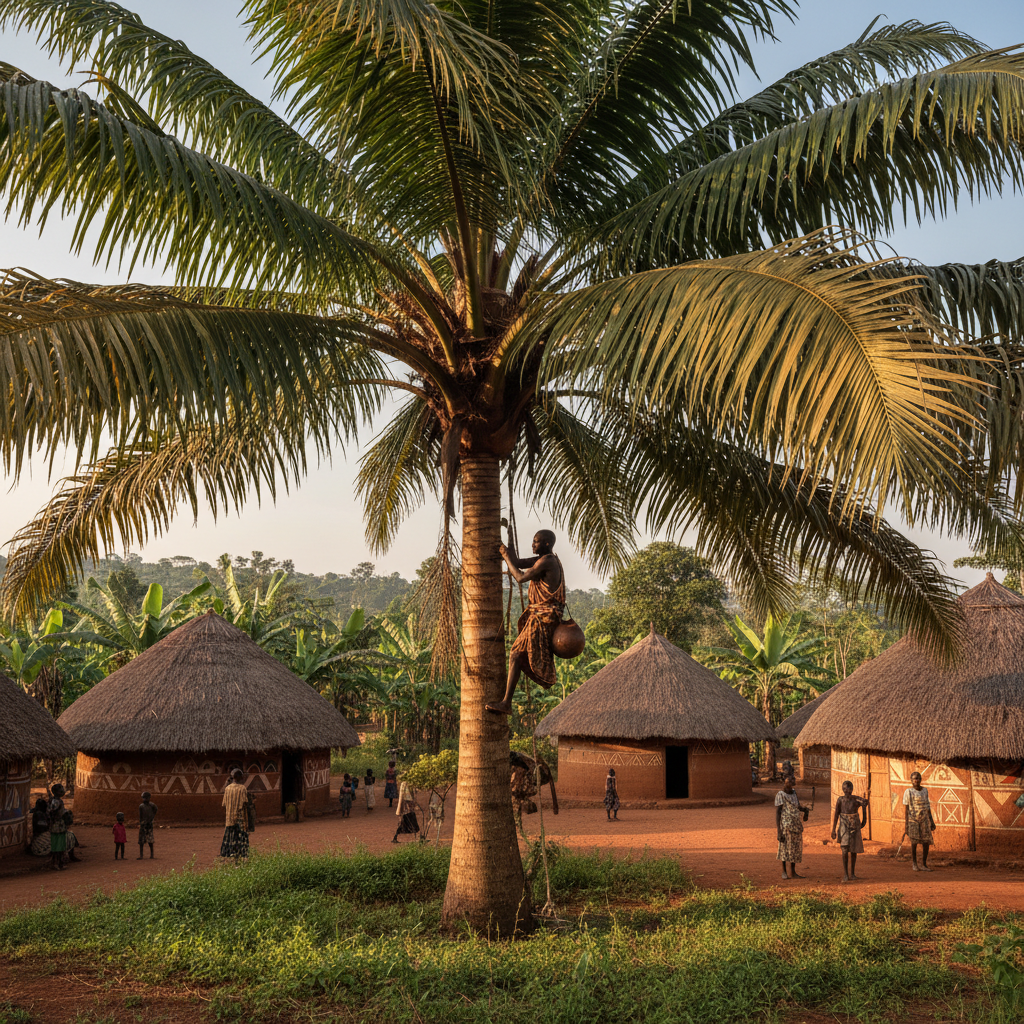
Raffia Palm
Raphia hookeri / farinifera
The cultural backbone of the Bamileke highlands — few plants are as economically, socially, and architecturally important. Young stems yield raffia wine (palm wine — the lifeblood of Bamileke social gatherings); leaves are split and woven into baskets, mats, and walls; fibres produce rope and textiles; the trunk provides construction timber. The palm dies after its single spectacular flowering — a phenomenon called 'hapaxanthic' monocarpism.
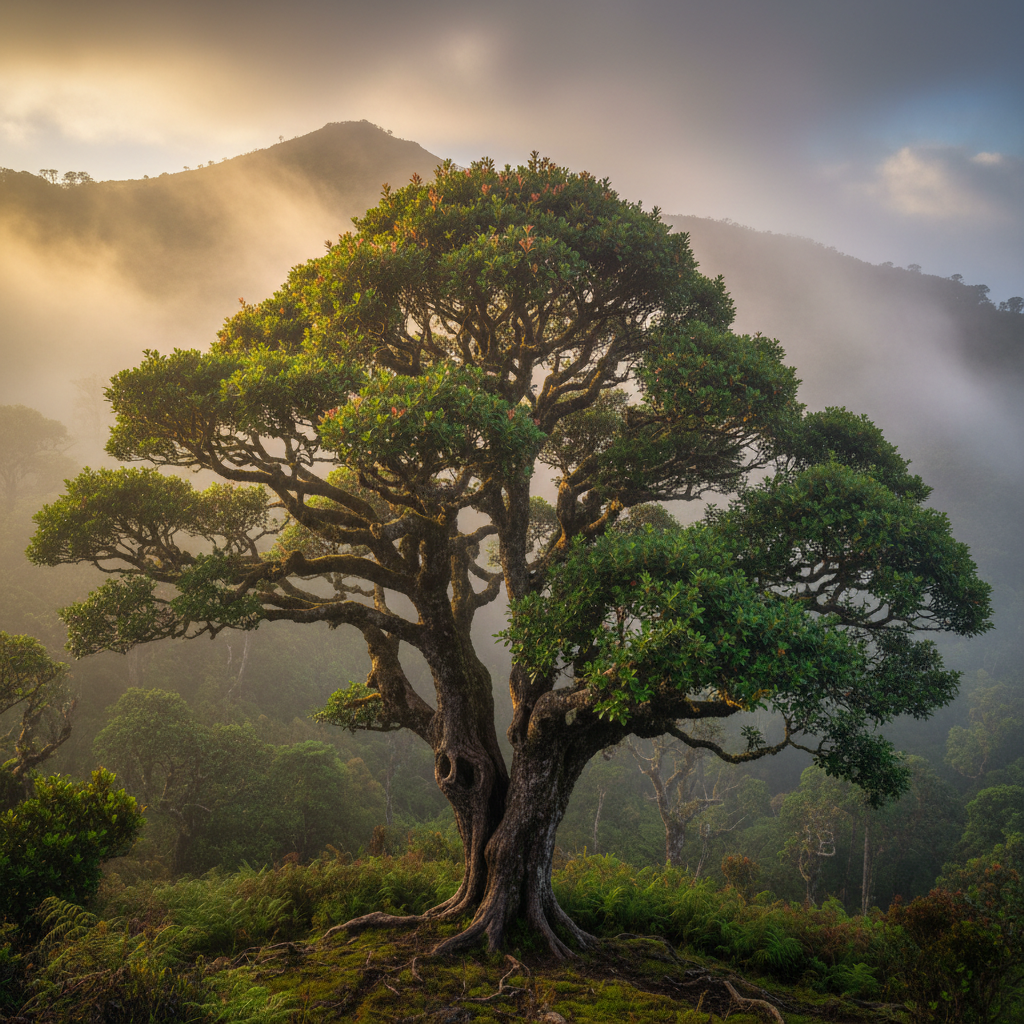
African Cherry (Pygeum)
Prunus africana
A montane tree found above 1,500 m on Mount Cameroon and the Bamenda Highlands. Its bark extract — the compound beta-sitosterol — is clinically proven and globally traded as a pharmaceutical treatment for benign prostatic hyperplasia (enlarged prostate), generating millions in export revenue. Bark is stripped from living trees — often killing them — causing catastrophic population decline. One of Cameroon's most over-exploited trees.
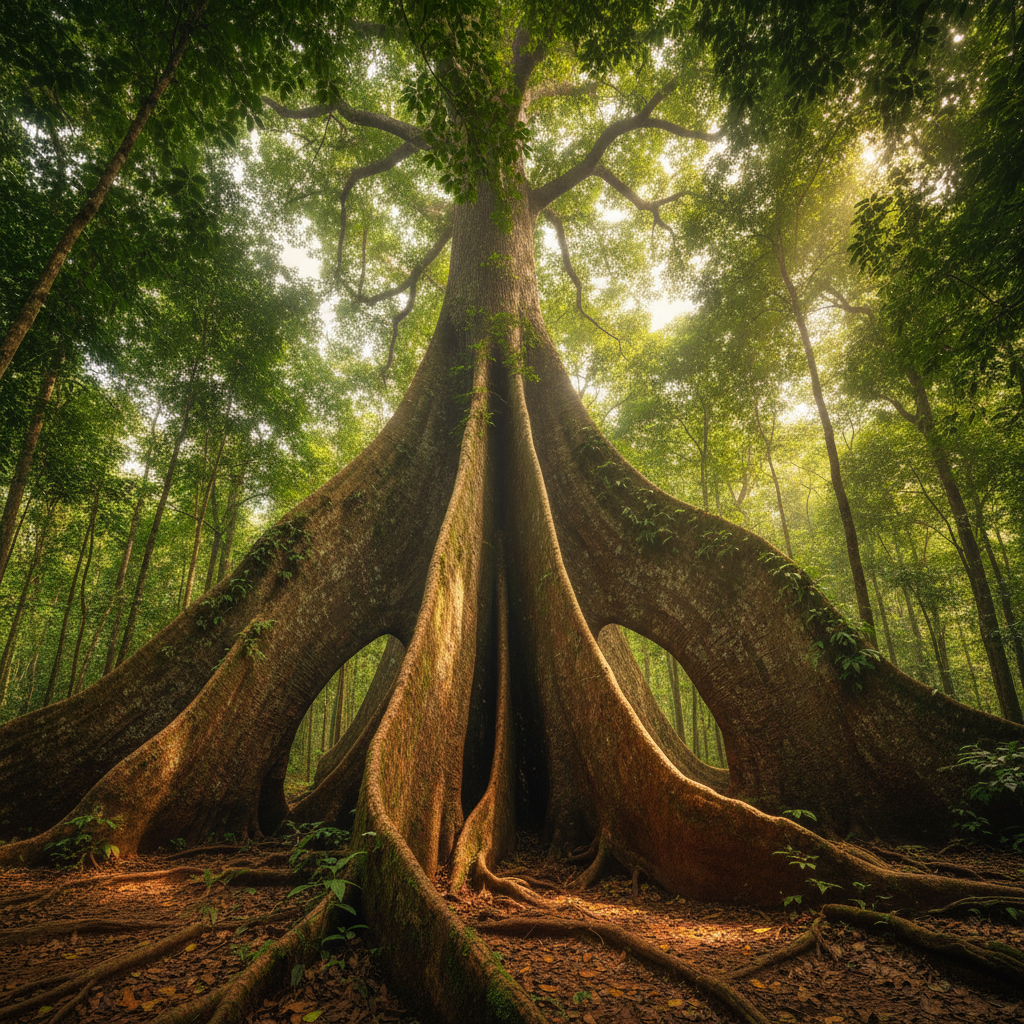
Moabi Tree
Baillonella toxisperma
A sacred giant of the Congo Basin — growing to 60 m with buttress roots spanning 8 m, moabi is as culturally important as it is biologically extraordinary. Its seeds yield moabi oil, rich in fatty acids, used for cooking, skin care, and healing. In Baka, Fang, and Maka traditions, individual moabi trees are 'owned' by specific family clans and passed down through generations — cutting one without family permission is a serious offence.
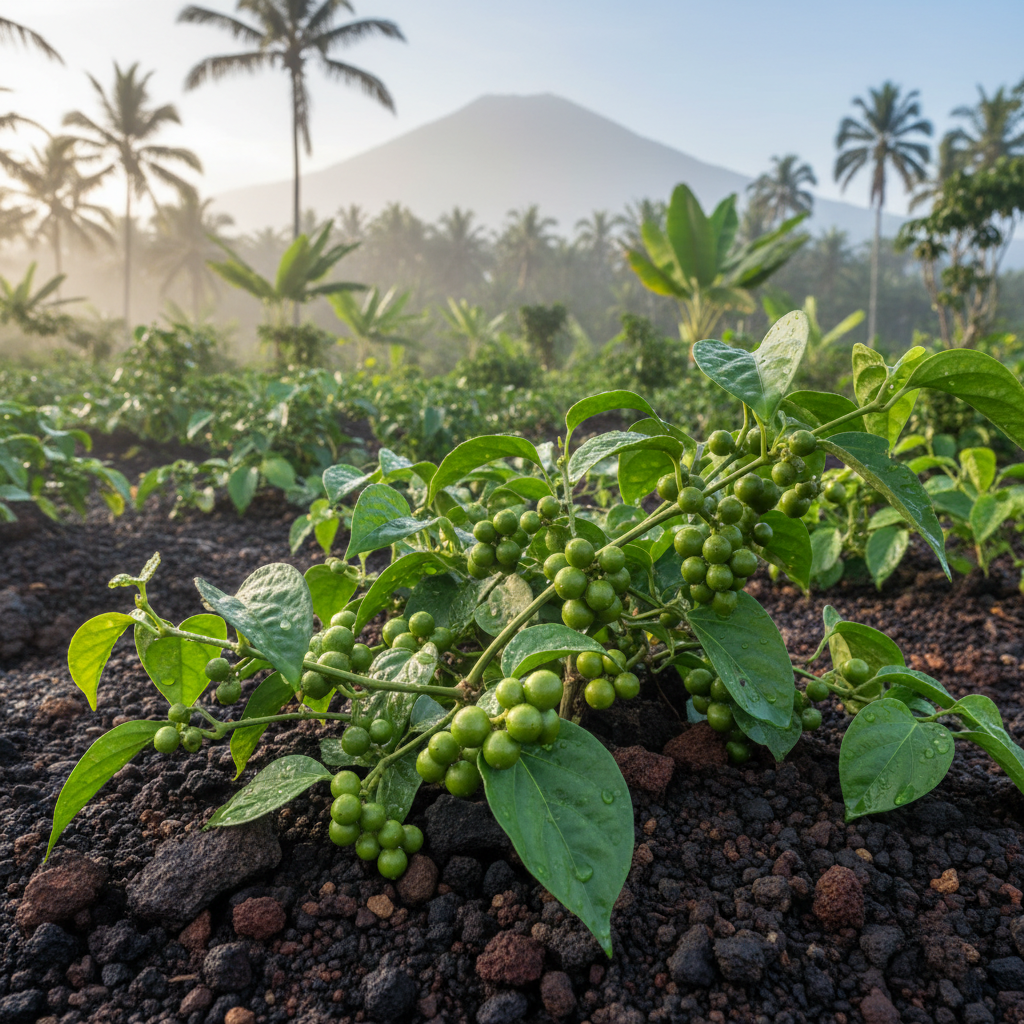
Penja White Pepper
Piper nigrum (Penja var.)
Grown exclusively in the fertile volcanic soils around Penja in the Littoral Region, Penja white pepper is internationally recognised as among the finest peppers in the world. It was the first African agricultural product to receive Protected Geographical Indication (PGI) status — the same designation as champagne or parma ham. Its unique terroir — volcanic basalt soils from Mount Cameroon's ancient eruptions — gives it floral, citrus notes unmatched elsewhere.
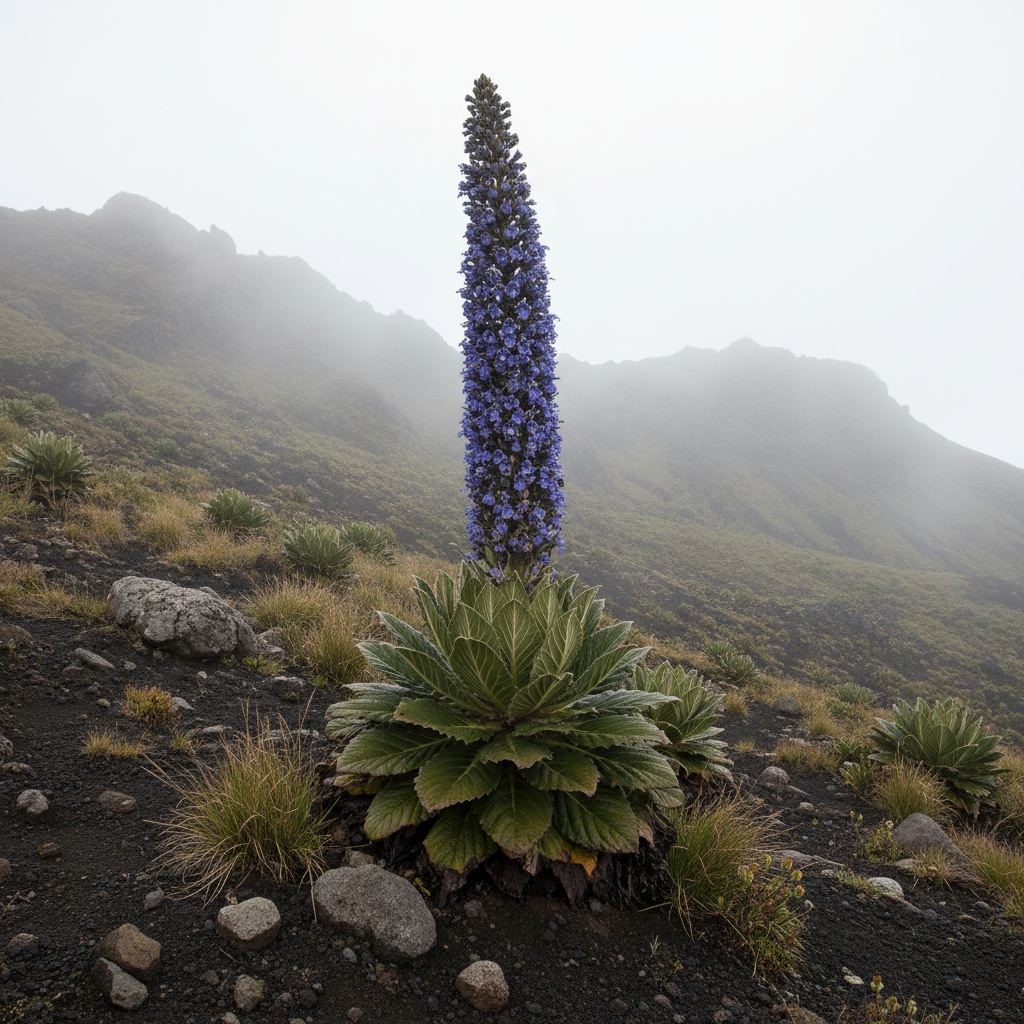
Giant Lobelia
Lobelia columnaris
One of the most visually extraordinary plants in Africa — a giant rosette plant endemic to the high altitude sub-alpine zones of Mount Cameroon and the Cameroon Highlands. Grows to 5 m with a spiralling crown of broad leaves and a towering blue-purple flower spike. Adapted to extreme daily temperature swings: +18°C in daytime sun to near-freezing at night. Uses specialised mechanisms to protect its growing tip from frost.
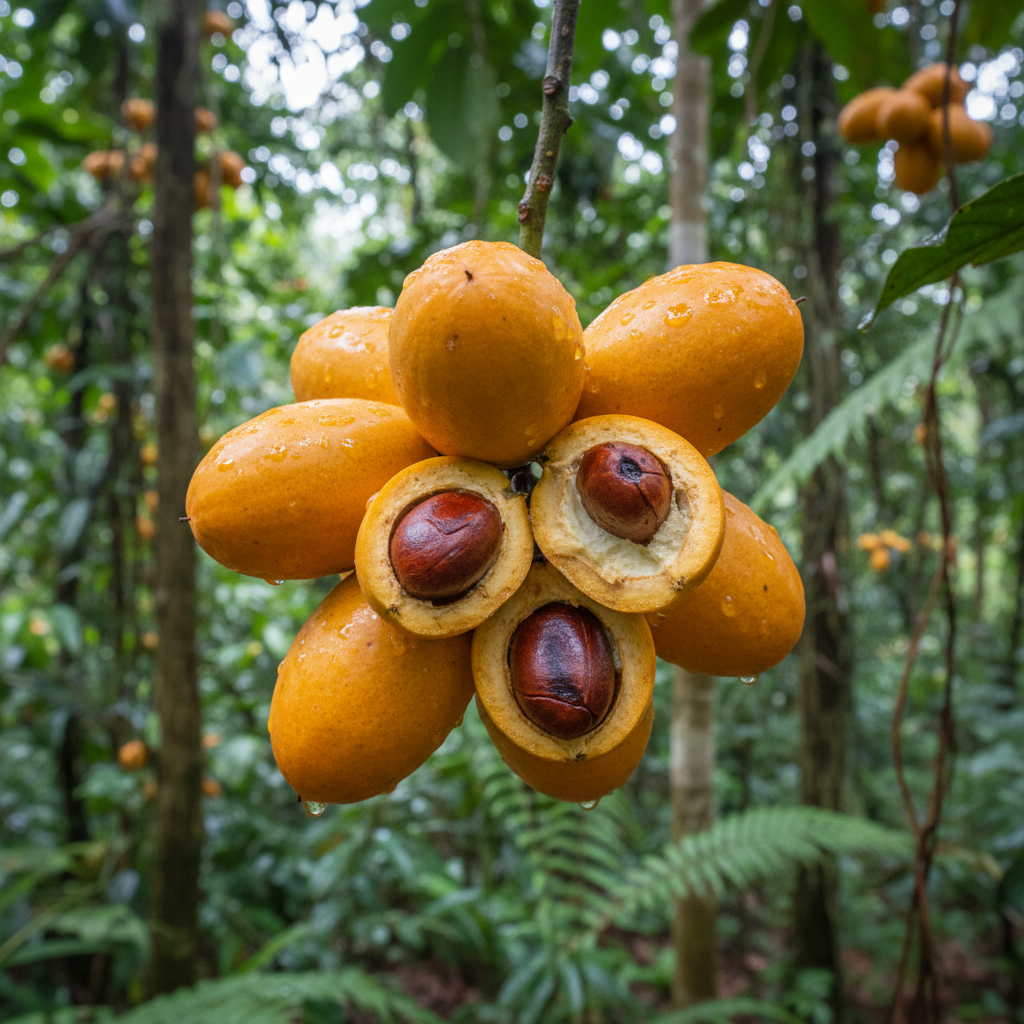
Bitter Kola
Garcinia kola
Known across West Africa as the 'wonder nut', bitter kola (garcinia kola seeds) are chewed as a stimulant, traded at markets, and offered as a ritual gift at every significant traditional occasion. Modern science is validating what communities have known for millennia: kolaviron, a biflavonoid compound from bitter kola, shows antiviral, anti-inflammatory, and anti-cancer properties. During the 2014 Ebola outbreak, communities increased bitter kola consumption believing (correctly, early research suggests) it may inhibit viral replication.
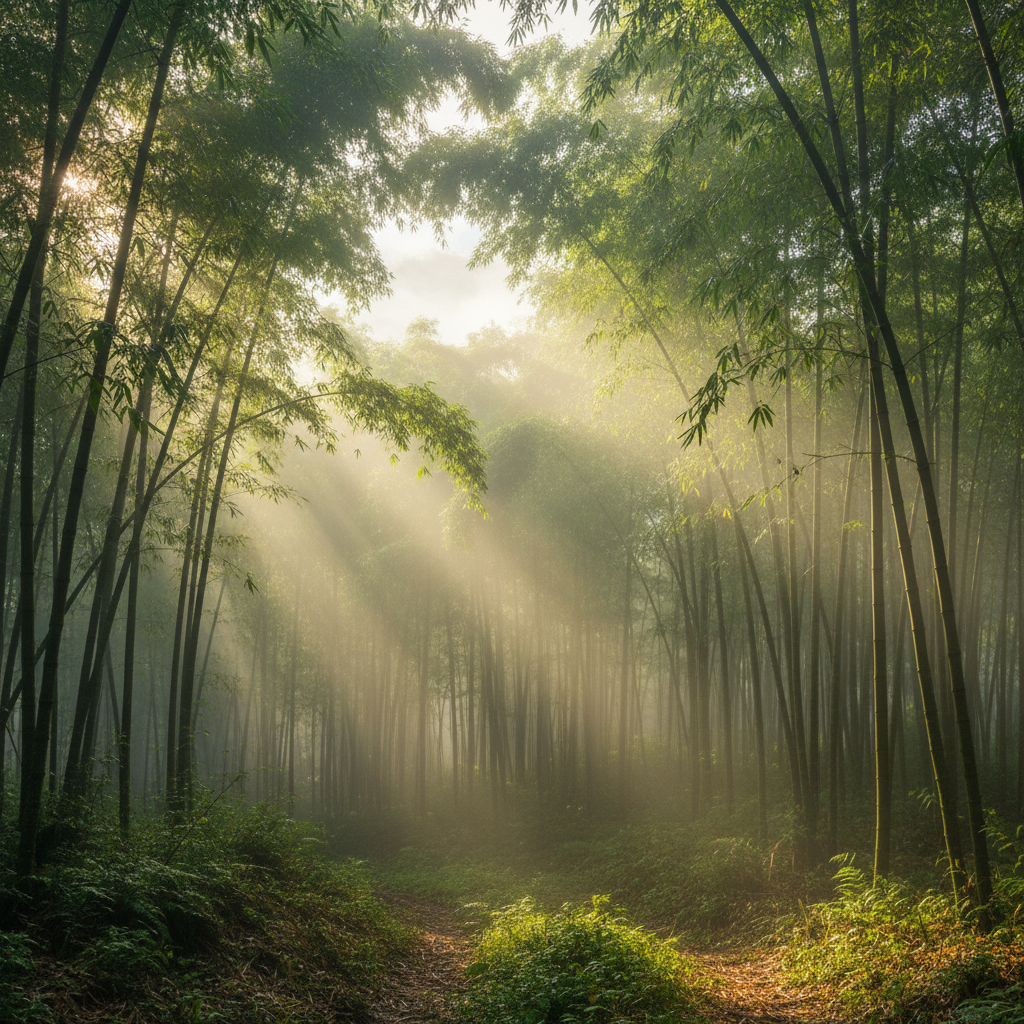
Highland Bamboo
Yushania alpina
The dominant bamboo of the Cameroon Highlands, forming dense mountain forest patches above 2,000 m. Critical habitat for the drill monkey, mountain gorilla, and dozens of endemic birds. Growing at extraordinary speed — up to 30 cm per day in the rainy season — bamboo forests regenerate faster than any tree. Stems are used in construction and furniture; young shoots are harvested as vegetables; the forest absorbs five times more carbon than equivalent tropical forest.
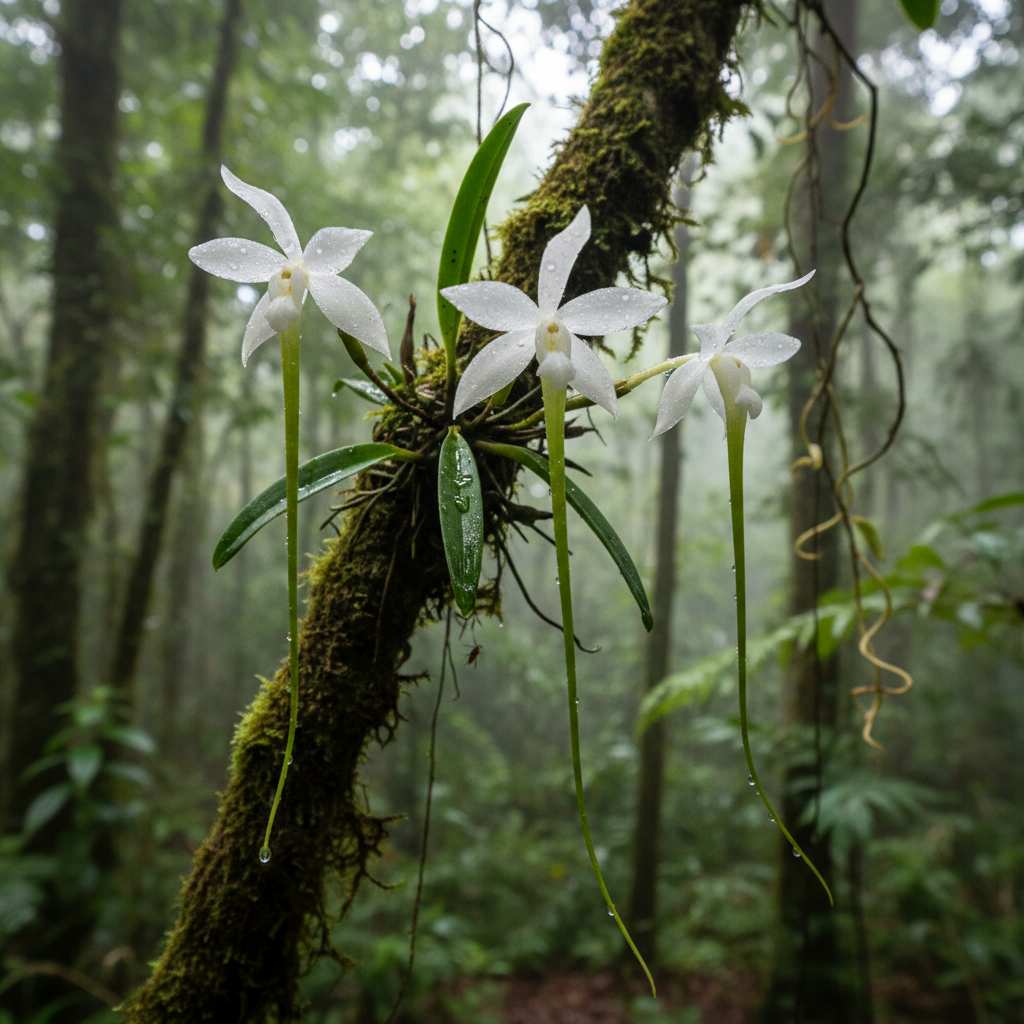
Cameroon Orchid
Angraecum sesquipedale var. camerunensis
Cameroon's rainforests host over 450 orchid species — among the highest densities in Africa. These epiphytic orchids grow on tree branches without soil, drawing moisture and nutrients from air and rain. Many are endemic to specific mountains or forest patches. Pollinated by specialist long-tongued hawkmoths that visit only at night. Orchid diversity in the Cameroon Highlands is so extraordinary that new species are still being discovered annually.
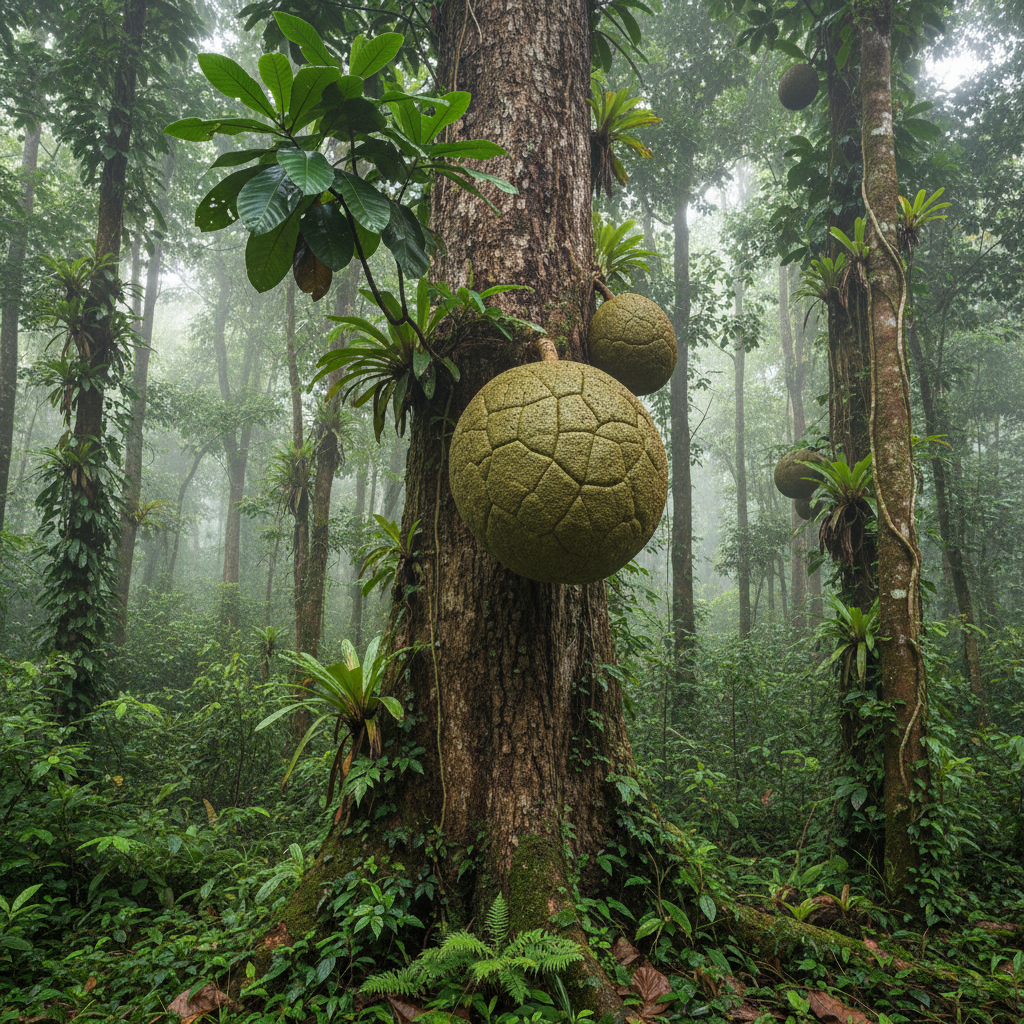
African Breadfruit
Treculia africana
A large forest tree with extraordinary fruits up to 50 cm in diameter and 14 kg in weight — some of the largest fruits of any tree in Africa. Seeds — called 'ukwa' in the Southeast — are roasted, boiled, or ground into flour and are a nutritionally dense protein source (30% protein). The bark contains antimicrobial compounds. Its vast canopy provides shade and erosion protection. A tree deeply embedded in forest community food security.